Posts

Showing posts with the label Book Review

Book Review: Software Security for Developers

Image
With the growing reliance on AI-assisted coding, managing application security is more critical than ever, as humans ultimately have to own the code they are responsible for. As the authors of Software Security for Developers note early on: "While developers often focus on libraries, frameworks, and tools at the mid-level, true security stems from foundational knowledge of standards, protocols, and patterns, as well as adherence to corporate and industry security practices." The first section provides the big picture and does a good job of explaining the high-level security vocabulary of modern software systems, which is further unraveled in subsequent chapters. The following sections move into deep cryptography primitives (AES, RSA, ECC), implementing secure transport layers (mTLS, X.509 certificates), and mastering enterprise-grade identity patterns like OAuth2, OpenID Connect (OIDC), PKCE, WebAuthn, and microservice call-chain authorization. The code examples are Java-cen...

Shakespeare in Numbers

Image
Nothing definitive is known about Shakespeare but Bill Bryson’s brilliant research and laugh-out-loud writing makes you feel like you’re actually strolling through Elizabethan England, dodging questionable street food and dodging the plague, while reading the Bard of Avon’s biography. Shakespeare is believed to have been born in 1564 and died in 1616, but many records of his estate vanished in the Great Fire of London in 1666.  More than 80 different spellings of his name have been recorded. The one we all use isn’t even the Oxford English Dictionary’s top pick (they prefer Shakspere). It was fun to know that over 50 candidates have been proposed as the “real” Shakespeare. Some people just can’t accept that one guy achieved so much. By his early thirties, Shakespeare was earning a comfortable 200 to 700 pounds a year – solidly upper-middle-class for the time. He married Anne Hathaway, who was eight years older (a man ahead of his time).  Shakespeare wasn’t just a writer – he w...

Book Review: Microsoft Azure in Action

Image
A couple of decades ago, technical books were the primary way to learn new technologies, until ebooks and video tutorials took over. Physical books still hold a special charm for me, especially when I want to study without distractions. Among the Azure books I’ve read, my favourite is Learn Azure in a Month of Lunches by Iain Foulds, which I read during the Covid lockdown. I enjoyed it because it has all the  ingredients I expect in a good technical book . It doesn’t force the reader to read between the lines and is well supported by clear illustrations and screenshots. I liked it so much that I now use it as a benchmark to rate other technical books. I started reading Microsoft Azure in Action (2025) by Lars Klint to catch up on newer services and features and to see how they can be applied to real-world scenarios. Written by a Microsoft Azure MVP from Australia, the book is a practical, hands-on guide designed to help developers and engineers navigate the vast landscape of Micr...

Book Review: Grokking Relational Database Design

Image
The evolution of AI is deeply intertwined with how data has been managed, structured, and ultimately harnessed for intelligence. In this context, the foundational skill of database design remains as relevant as ever although it's often seen as unglamorous due to the somewhat esoteric database jargon.  Grokking Relational Database Design , written by academicians Qiang Hao and Michail Tsikerdekis, is a beginner-friendly guide that explains complex concepts with modern references, relatable examples and helpful design diagrams. What stands out is the authors’ teaching experience, which informs their approach. The book avoids being anchored to a single RDBMS. It references widely used systems like MySQL, PostgreSQL, SQLite, SQL Server, and Oracle, encouraging learners to apply their knowledge using freely available tools like dbdiagram.io and sqliteonline.com . Years ago, when there were far fewer accessible learning resources or real-world data model samples, I often relied on...

Book Review: Writing for Developers

Image
Writing for Developers: Blogs that get read by Piotr Sarna and Cynthia Dunlop My rating: 5 of 5 stars Technical writing and blogging may not come naturally to everyone. For many developers, the idea of putting thoughts into words can feel daunting. But the truth is, these skills are incredibly valuable whether you’re writing engineering blogs , presenting your work on platforms like GitHub or Kaggle, or simply communicating your ideas more effectively. The problem? There aren’t many resources out there to help developers master these skills. You could spend hours dissecting popular tech blogs, trying to decode their style and structure, or you could pick up a copy of " Writing for Developers " by Piotr Sarna and Cynthia Dunlop. Tech blogs and community forums are invaluable for developers. They bridge the gap left by the often dry and technical official documentation of software products and services. As a long-time blogger, I was thrilled to discover this book dedicated t...

How to Lie with Statistics

Image
There are three kinds of lies: lies, damned lies, and statistics. - Disraeli. The book " How to Lie with Statistics ", first published in 1954, is an attention grabbing title for what should have really been called "A Guide to Spotting Statistical Trickery" This book exposes common statistical manipulations used to mislead audiences. The author explains in a light-hearted way through its ten chapters how to critically evaluate statistical claims and avoid being deceived by distorted data. In this age of both human & AI driven misinformation, this book is more relevant than ever. Chapter 1: The Sample with the Built-in Bias Trick: Presenting data based on a biased sample that doesn't accurately represent the population it claims to reflect. For example, using a sample of Yale graduates with known addresses to determine the average income of all Yale graduates. This method excludes those who may not be as financially successful, resulting in an inflated av...

Learn AI-Assisted Python Programming: With GitHub Copilot and ChatGPT

Image
Learn AI-Assisted Python Programming: With GitHub Copilot and ChatGPT  by Leo Porter and Daniel Zingaro is one of the best programming books I’ve read. Written by experienced educators, the book stands out for its unique structure and presentation, effectively guiding readers on how to learn programming with the help of AI assistants like GitHub Copilot. This groundbreaking book sets a new standard for tech books, showing how programming skills can be taught while leveraging AI tools.  I had the privilege of participating in the beta review of this book by Manning in 2023, and I’m thrilled to have now read the complete version and put it to use. As a web developer with experience in JavaScript and C#, I appreciated the book's fresh approach to leveraging an AI Assistant and recognizing the advantages of Generative AI for coding. The authors of the book state at the beginning that no prior programming experience is needed, and basic computer literacy is sufficient for readers ...

The Garden of Life

Image
Naveen Patnaik is one of the longest-serving chief ministers of any Indian state having won five consecutive terms. Before he became Chief Minister of Odisha,  Naveen Patnaik authored 3 books  including  The Garden of Life .   This book covering 70 healing plants out of the 1500 that Charaka’s treatise describes in Charaka Samhita (pre-2nd century CE), was a great introduction for me to Ayurveda. Along with the Sushruta Samhita, Charaka Samhita or Treatise of Charaka (pre-2nd century CE) is one of the two foundational texts of this Ayurveda that have survived from ancient India. Charaka’s treatise describes 1,500 plants and identifies 350 of them as valuable for medicinal purposes. The Garden of Life is divided into five sections--Sacred, Medicinal, Culinary, Cosmetic, and Aromatic--and features discussion of the applications of seventy plants along with some interesting anecdotes. SACRED PLANTS Banyan (Ficus bengalensis) - Indian merchants, or banias , frequen...

Inventive Wizard: George Westinghouse

Image
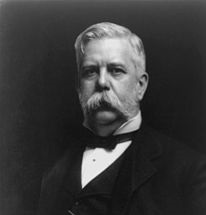
George Westinghouse Jr. (1846 – 1914) was an American entrepreneur and engineer based in Pennsylvania who created the railway air brake and was a pioneer of the electrical industry, receiving his first patent at the age of 19.  I enjoyed reading his inspiring biography  Inventive Wizard  by Israel E Levine as a teenager and re-read the highlighted parts recently. The engaging story-telling and dramatized conversations like this between the 19-year old George and his alarmed father when he hears his son's aim in life is to be inventor, make it a great read - "An inventor. I want to invent things. I think I have a knack for it, but more important, it's what I want to do most in the world. The car replacer I've told you about, for instance I think I could sell it to the railroads." Mr. Westinghouse turned to his son and stared at him for a long moment. "George, I'm going to be perfectly frank. You've always had pretty much your own way. You're a man...

Oracle Autonomous Database for Dummies - Notes

Image
Excerpts & paraphrased notes from the book  Oracle Autonomous Database for Dummies  (PDF, 83 pages) - An autonomous database is a cloud database that uses ML to eliminate the human labor associated with database tuning, security, backups, updates, and other routine management tasks.  It combines the dynamic agility of  the cloud with the intelligent responsiveness of applied, adaptive machine learning (ML).  The design goal is to make the database intelligent and self-reliant so as to minimize or eliminate human labor  — and associated human error  — and ensure data safety and optimal performance. The core attributes of Autonomous Database  — self-driving, self-securing, and self-repairing . At startup, it automatically establishes a triple-mirrored scale-out configuration in one regional cloud data center, with an optional full standby copy in another region. By applying software updates in a rolling fashion across nodes of the cluster, it k...

Book Review - Kishore Kumar: Method in Madness

Image
Kishore Kumar: Method in Madness  by Derek Bose is a very engaging and well-written biography of the versatile entertainer who was not trained in music but whose work lives on & regales the masses. Each of the ten chapters of the book is about the different roles Kishore Kumar has played in a magnificent career spanning forty years. Starting as an actor at 19, he went to sing , compose, perform in stage shows, produce & direct films while being hugely popular in all the roles.  Kishore Kumar as we know him now was born on August 4, 1929 in Khandwa, a tiny township in the central Indian province of Madhya Pradesh.  A funny anecdote from the book as narrated by his elder brother Ashok Kumar about Kishore's early days:  "As a child his voice was very shrill. His speech too, was not clear as he was often down with cough and cold. But he was very fond of singing. It was more like screeching than singing. I was trained in classical music and used to sing regularly....

Kind of Hindu, essay by Mindy Kaling

Image
Mindy Kaling is the first Indian American to create and star in her own TV show (“The Mindy Project”).  Kind of Hindu is one of seven essays each available as a Kindle book from her collection titled "Nothing Like I Imagined". Though largely secular, she adopts Hindu traditions when they fit the moment. On the eve of her daughter's mundan or the ancient Hindu ritual of shaving her baby's head to ward off negativity, she delves on the religion of her birth, the ceremony and the question: "How Indian do I want my daughter to be?" through the essay. Excerpts & my favorite parts: I am kind of Hindu. Or, more accurately, when I was growing up in Massachusetts in the 1980s and '90s, I was told that I was Hindu. This knowledge was a positive thing, largely because it helped me to answer questions about ethnicity on forms. What it meant essentially was that I attended pujas (Indian religious gatherings/ceremonies) once or twice a year, which always felt mor...

Book Review: One Foot on the Ground: A Life Told Through the Body

Image
I got to not know about Shanta Gokhale only after reading an excerpt from her book  One Foot on the Ground: A Life Told Through the Body . I bought my copy after getting bowled over by the author’s wizardry of words and profound observations.  "However high the flights of the mind or of ambition, it is ultimately the body that allows or disallows them. Athletes have a proper sense of this. After his eighth Wimbledon win, Roger Federer said, 'Again and again I am grateful my body has cooperated.' He was thirty-six, which is supposedly ancient for tennis. It is vital then to accept the body in all its beauty, mystery and power; to know that the images we build of ourselves might one day be rudely shattered by its exigencies." I found out later that she is the author of several English & Marathi books, translator, scriptwriter and mother of actress Renuka Shahane.  After the author reveals at various points in the book, I also learned that she's a feminist, rati...

The Last Lecture - Randy Pausch

Image
Randy Pausch (1960-2008) was a computer-science and human-computer interaction professor at Carnegie Mellon University. After being diagnosed with terminal cancer and given only 3-6 months to live, he gave a now-famous speech  in September 2007 called The Last Lecture: Really Achieving Your Childhood Dreams  that is available on YouTube.  I’m going to keep having fun every day I have left. Because there’s no other way to play it.  The lecture was written quickly-in under a week. After being uploaded on YouTube, the talk went viral and Pausch went on to appear on Oprah and write a best-selling book expanding on the lecture topics along with former Wall Street Journal columnist Jeffrey Zaslow. As a reminder of how fragile life really is, Pausch’s co-author, Jeffrey Zaslow, died in a car accident, a few years after their book was published.  Written in a breezy, conversational style with gentle humor, it has great life lessons. Excerpts & memorable quotes - ...

Persepolis - The Story of a Childhood and The Story of a Return

Image
Marjane Satrapi's memoir Persepolis in the form of powerful drawings in black & white is like nothing I've seen before.  She prefers to call it a comic book rather than a graphic novel . This comic book collection ( from 2000 & 2004 ) has also been made into a 96-minute animated movie in 2007 and both the formats have won rave reviews.  The Iran-born author's candid & often humorous narration of her years growing up during the Iranian revolution makes a sad & depressing story interesting and informative.  This book is not for the easily offended.  While the book is engrossing enough for a single reading, for students of comic art & aspiring graphic novelists, this is a great resource to learn from.

Book Review: "My Days"

Image
Having read many of R K Narayan's books & grown up watching the televised version of Malgudi Days, I had long wanted to read his autobiography. I managed to finish " My Days " right after reading R K Laxman's " The Tunnel of Time ". It was a treat to know more about the creative and illustrious brothers first-hand from their autobiographies in their own candid writing style.  R K Narayan's evocative prose, gentle humor & vivid descriptions make the book an engrossing read. It is like time-travelling with him into his past. As a master story teller, R K Narayan can write about even the most mundane of things and make it entertaining and interesting with his unique perspective.  R. K. Narayan was born in Madras in 1906 & spent his early childhood in the care of his maternal grandmother as his father's school headmaster job entailed frequent transfers. Growing up in a academically inclined but a large middle class family (with seven sibling...