This Week I Learned - Week 36 2026
This Week I Learned -
* Anthropic has released a report titled "Detecting and countering misuse of AI: September 2026" that details the disruption of Claude model misuse from December 2025 to August 2026 across seven categories including cyberattacks, influence campaigns, surveillance, weapons development, biological research, scams, and model distillation by actors linked to Russia, China, Iran, and Yemen.
Sophisticated attacks no longer require sophisticated attackers. A single Claude subscriber built a mass surveillance platform for Mali's state intelligence. It covers 25 million SIM cards from all its national carriers. Banning the user's Claude subscription was pointless as their system now fully runs on local AI.
* Cloudflare (and similar systems) now treat declared AI crawlers as a monetizable, identifiable class of traffic that can be allowed or charged, while ordinary human visitors routinely face CAPTCHAs, challenges, and other verification steps meant to prove they are not bots.
* In his book, AI Native - The Mandate to Transform Your Company, Kai Fu Lee offers a practical roadmap to redesign organizations and harness agentic AI.
* GPT Image 2.5 can convert black and white photos into color more effectively than GPT Image 2 and Gemini 2.5 Flash.
* Billions of transistors make a processor. One or more processors make up a server. Multiple servers fill a rack. Multiple racks are combined into clusters. Multiple clusters make up one data centre. Across trillions of transistors, the amount of heat thus generated can be considerable.
A 1-GW data centre will in principle produce 1 GW of heat. The planned Google ‘hyperscaler’ near Visakhapatnam and the newly announced Tata Consultancy Services (TCS) ‘HyperVault’ will each be 1-GW facilities. Google has confirmed it will use air-cooling technology HyperVault plans to use direct-to-chip (DTC) liquid-cooling as well as use renewable energy. - The Hindu
* Global memory chip prices have more than doubled, and with the rupee sliding nearly 10% through FY26, costs for phones and electronics have climbed even higher.
* Raspbian is a free, open-source Linux distribution based on Debian, specially optimized for the Raspberry Pi’s ARM hardware (particularly the original ARMv6 chips). It quickly became the preferred and then official OS for the Raspberry Pi.
Mike Thompson, creator of Raspbian, launched the OS to make low-cost computing accessible for education and tinkering via Raspberry Pi hardware.
He criticized the surge in AI chip demand for causing DRAM shortages, which pushed higher-end Raspberry Pi 5 prices from $120 to over $300, and argued that AI hype is discouraging people from learning programming by treating it as a “commodity skill.”
* Samsung India Electronics has started laying off its workforce in phases as its core smartphone business faces pressure on sales and margins following a more than twofold increase in memory chip prices. Mobile phones generate three-fourths of Samsung's India revenue. Samsung's premium Galaxy Fold and Flip series have sold well, though phones priced above Rs 1 lakh remain a sliver of overall volumes at 4%. It slipped from second to third place in India's smartphone market in the April-June quarter, overtaken by Vivo and running close behind Oppo.
* China remained the dominant source of India’s semiconductor imports in 2025–26, accounting for 48.9 per cent of total imports
* Google's Magika is an open-source, AI-powered file content type detection tool.
* Singapore has an overall population of over six million — of which 75% are Chinese, 15% Malays, about 9% Indians and the rest from other countries.
* Bengaluru has a population of around 12.5 million and over 11.5 million vehicles.
* Sri Lanka enforced traffic-light front-of-pack labelling (FOPL) regulations (red/amber/green for high/medium/low) for beverages in 2016 and expanded to solid/semi-solid foods in 2019 under the Food Act to combat NCDs and empower consumer choices.
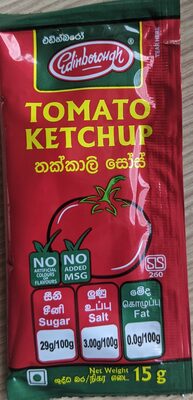
With clear front-of-pack labelling and greater nutritional awareness, India too can reduce diabetes and high blood pressure. Front-of-pack warning labels in India have been pushed back for more than a decade because of resistance from the industry.
* Telangana government spends around ₹14,000 crore annually on free electricity for agricultural pump sets. Recent reports confirm that the subsidy for ~30 lakh farm connections is one of the largest welfare expenditures in the state.
* Sea Buckthorn (Leh Berry), native to Ladakh and Spiti Valley, packs roughly 12 times more vitamin C than oranges, making it one of India's richest natural sources of vitamin C.


Comments
Post a Comment