Book Review: Microsoft Azure in Action
A couple of decades ago, technical books were the primary way to learn new technologies, until ebooks and video tutorials took over. Physical books still hold a special charm for me, especially when I want to study without distractions.
Among the Azure books I’ve read, my favourite is Learn Azure in a Month of Lunches by Iain Foulds, which I read during the Covid lockdown. I enjoyed it because it has all the ingredients I expect in a good technical book. It doesn’t force the reader to read between the lines and is well supported by clear illustrations and screenshots. I liked it so much that I now use it as a benchmark to rate other technical books.
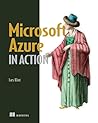 I started reading Microsoft Azure in Action (2025) by Lars Klint to catch up on newer services and features and to see how they can be applied to real-world scenarios. Written by a Microsoft Azure MVP from Australia, the book is a practical, hands-on guide designed to help developers and engineers navigate the vast landscape of Microsoft’s cloud platform.
The book avoids dry academic jargon and instead adopts a real, field-proven, and human approach. It indeed feels like learning from a colleague who has "been there, tried that." There are plenty of helpful tips from the trenches along the way. For example, the author advises readers not to blindly accept default values in Azure wizards, as these choices can affect an entire project later on. Leaving network access methods at their defaults, for instance, can result in storage endpoints being publicly accessible. Guidance such as "You can never change the name of the admin user once set on Azure SQL Server, so tread carefully" is particularly useful for avoiding operational pitfalls. He warns against giving AI Foundry too many permissions, "unless you want AI Foundry rummaging through your archives like a caffeine-fueled intern" in the chapter on Azure AI.
While you can easily follow along with a laptop to try out what you read, the clearly labelled screenshots also allow the book to be read independently without losing context.
The book covers around 36 core Azure services and their key features (out of the 200+ services available on the Azure platform) across 11 chapters including a very timely one on new features in Azure AI. It is structured into three parts: starting with foundational concepts, moving into core infrastructure such as networking and virtual machines, and finishing with modern application development using serverless technologies and databases like Azure Cosmos DB.
By using relatable scenarios such as an underground bookstore and a clothing store running a traditional on-premises setup, the author makes complex cloud architecture concepts feel approachable and even fun.
The writing is engaging and uses clever metaphors. For instance, Azure Monitor is described as "the stethoscope, heart rate monitor, and nervous system for your Azure resources." The tone is conversational and sometimes deliberately casual, making an otherwise serious subject feel light-hearted. At one point, the author compares multiple virtual networks that need to communicate to “teenagers on the phone, discussing the latest pop music all night long.”
Also see: My reviews on Good Reads
Among the Azure books I’ve read, my favourite is Learn Azure in a Month of Lunches by Iain Foulds, which I read during the Covid lockdown. I enjoyed it because it has all the ingredients I expect in a good technical book. It doesn’t force the reader to read between the lines and is well supported by clear illustrations and screenshots. I liked it so much that I now use it as a benchmark to rate other technical books.
I started reading Microsoft Azure in Action (2025) by Lars Klint to catch up on newer services and features and to see how they can be applied to real-world scenarios. Written by a Microsoft Azure MVP from Australia, the book is a practical, hands-on guide designed to help developers and engineers navigate the vast landscape of Microsoft’s cloud platform.The book avoids dry academic jargon and instead adopts a real, field-proven, and human approach. It indeed feels like learning from a colleague who has "been there, tried that." There are plenty of helpful tips from the trenches along the way. For example, the author advises readers not to blindly accept default values in Azure wizards, as these choices can affect an entire project later on. Leaving network access methods at their defaults, for instance, can result in storage endpoints being publicly accessible. Guidance such as "You can never change the name of the admin user once set on Azure SQL Server, so tread carefully" is particularly useful for avoiding operational pitfalls. He warns against giving AI Foundry too many permissions, "unless you want AI Foundry rummaging through your archives like a caffeine-fueled intern" in the chapter on Azure AI.
While you can easily follow along with a laptop to try out what you read, the clearly labelled screenshots also allow the book to be read independently without losing context.
The book covers around 36 core Azure services and their key features (out of the 200+ services available on the Azure platform) across 11 chapters including a very timely one on new features in Azure AI. It is structured into three parts: starting with foundational concepts, moving into core infrastructure such as networking and virtual machines, and finishing with modern application development using serverless technologies and databases like Azure Cosmos DB.
By using relatable scenarios such as an underground bookstore and a clothing store running a traditional on-premises setup, the author makes complex cloud architecture concepts feel approachable and even fun.
The writing is engaging and uses clever metaphors. For instance, Azure Monitor is described as "the stethoscope, heart rate monitor, and nervous system for your Azure resources." The tone is conversational and sometimes deliberately casual, making an otherwise serious subject feel light-hearted. At one point, the author compares multiple virtual networks that need to communicate to “teenagers on the phone, discussing the latest pop music all night long.”
Occasionally, the casualness went a bit too far making some the humour feel forced, particularly the repeated references to "yak shaving" (a term for getting lost in endless prerequisite tasks)) but that may just be a matter of personal taste.
While Learn Azure in a Month of Lunches remains my favourite, Microsoft Azure in Action is one I’ll keep going back to for quick reference.
While Learn Azure in a Month of Lunches remains my favourite, Microsoft Azure in Action is one I’ll keep going back to for quick reference.
Also see: My reviews on Good Reads


Comments
Post a Comment